Whether a component can be manufactured economically is usually determined by the material. Titanium and nickel-based alloys require low cutting speeds and do not tolerate errors in the cooling strategy; aluminum allows for high feed rates but is prone to warping with thin wall thicknesses. We record cutting parameters, tool concepts, cooling strategies, and workholding for every approved material.
Al
Light Metal
Machinability
Good
Typical Industry
Ti
Light Metal
Machinability
difficult
Typical Industry
X5
Steel
Machinability
Moderate
Typical Industry
S355 – S690QL
Steel
Machinability
Moderate
Typical Industry
42CrMo4 / C45
Steel
Machinability
Moderate
Typical Industry
S235 / S355
Steel
Machinability
Good
Typical Industry
Ni
Superalloy
Machinability
very difficult
Typical Industry
Background
Four parameters determine tool life, surface finish, and costs. Those who know them for each material do not have to start from scratch with the next component.
Cutting speed and feed rate determine tool life and surface finish – documented for each material instead of estimated.
Substrate, coating, and geometry are matched to the material, not to what is currently in stock.
Internal cooling, pressure, and volume determine process reliability for titanium and nickel-based alloys.
Clamping forces must hold without deforming thin-walled components – this is determined in advance.
Manufacturing
Machinery
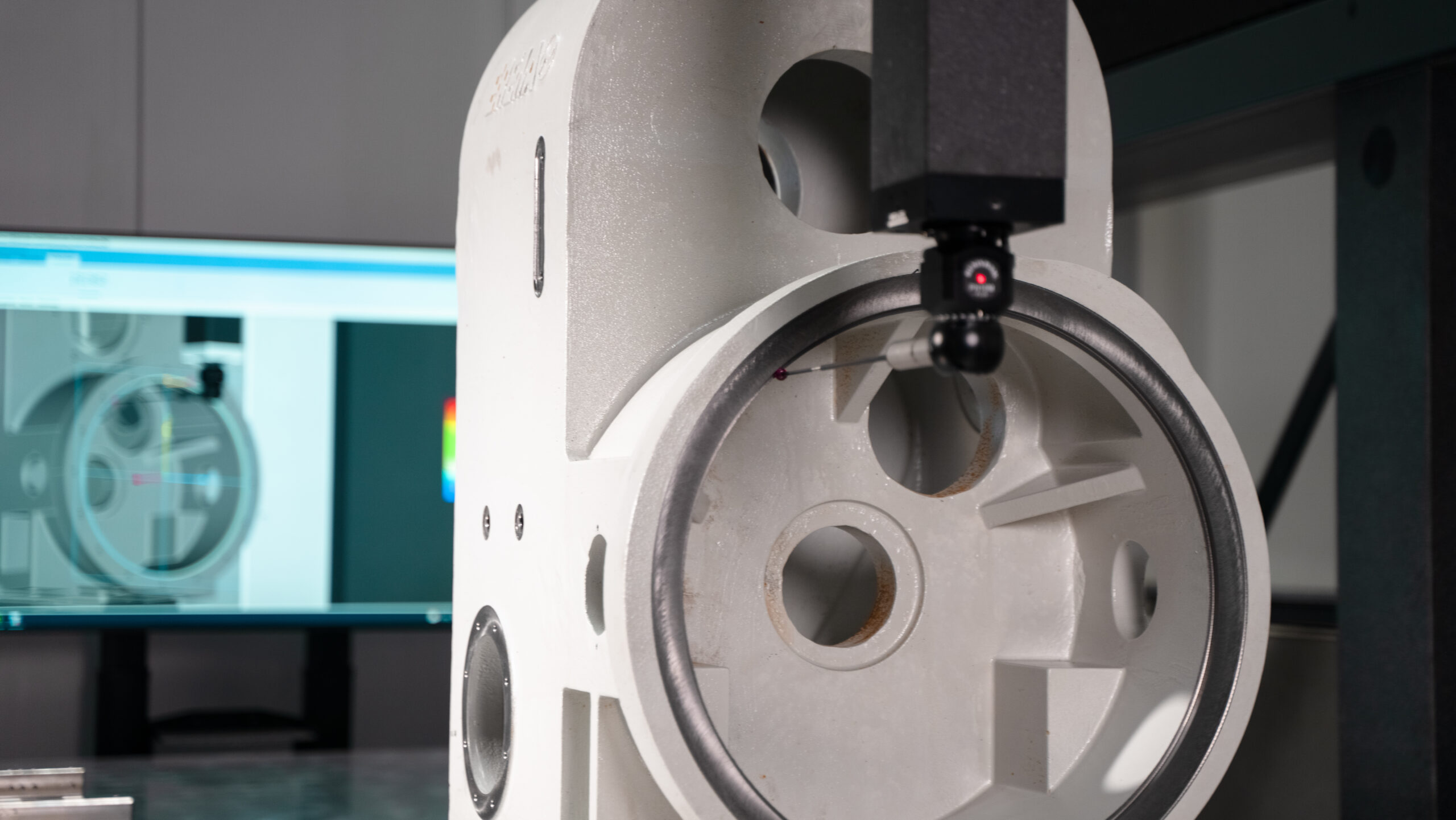
High spindle torque for titanium, high speeds for aluminum, and internal cooling for nickel-based alloys: our machinery covers both ends of the spectrum.
Inquiry
Tell us the material and component. We will check whether we can rely on empirical data or if a machining trial is necessary.
Your contact person